Topic Modeling
Text Matching and ClassificationTopic Modeling in NoorMag
Topic modeling in NoorMag has been developed with the aim of visualizing and providing an effective, useful representation of this website's data. This has been made possible using complex statistical analysis known as LDA[1].
Topic Modeling
Extracting structured information from within unstructured texts is the core of all achievements in Natural Language Processing and Text Mining technologies.
Among the various tools of this technology, there is a category of tools related to exploring texts that are unknown to the audience. In cases where the volume of text documents far exceeds what can be done manually by human agents, computational tools play their role.
One of the tasks that seems impossible to perform manually in large volumes is discovering the topics discussed within a corpus of texts.
Difference Between Topic Modeling and Text Classification
At first glance, a text classification system might seem like a suitable choice for this task. However, it should be noted that a text classification system is limited to pre-defined categories and is incapable of discovering and assigning new topics.
Topic modeling is a suitable solution for extracting topics from within a corpus and assigning documents to their related topics.
Topic from a Topic Modeling Perspective
From a topic modeling perspective, each topic is a statistical distribution of words existing in the text corpus. Of course, some words in the corpus vocabulary are removed from the word list during the preprocessing phase.
The ultimate goal of topic modeling is to create a meaningful statistical distribution over these vocabulary words, such that if certain words have higher weight within a topic, human agents also confirm that they belong to the same topic.
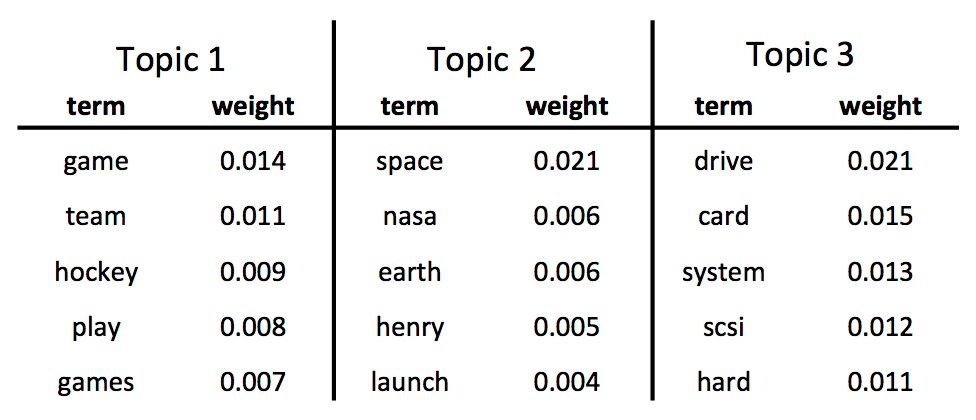
Figure 1: Assigning higher weight to co-topic words under a single topic is the goal of topic modeling.
Word Co-occurrence as the Basis for Topic Generation
The fundamental basis for creating the aforementioned statistical distribution in topic modeling is word co-occurrence. The more often certain words occur together within a single document, the more likely it is that those words belong to the same topic.
Furthermore, the independence of formed topics from one another, along with the effort to generate topics in which the words of each topic receive the highest weight, forms the framework that shapes the topic modeling process.
Topic Modeling in NoorMag
The use of topic modeling has been implemented experimentally in the NoorMag laboratory.
In the NoorMag laboratory, after selecting a topic category, the list of publications covering that topic is displayed. After selecting the desired publication, the topic model of that publication is displayed graphically. This allows the audience to become more familiar with the topics discussed in the articles of a specific publication.
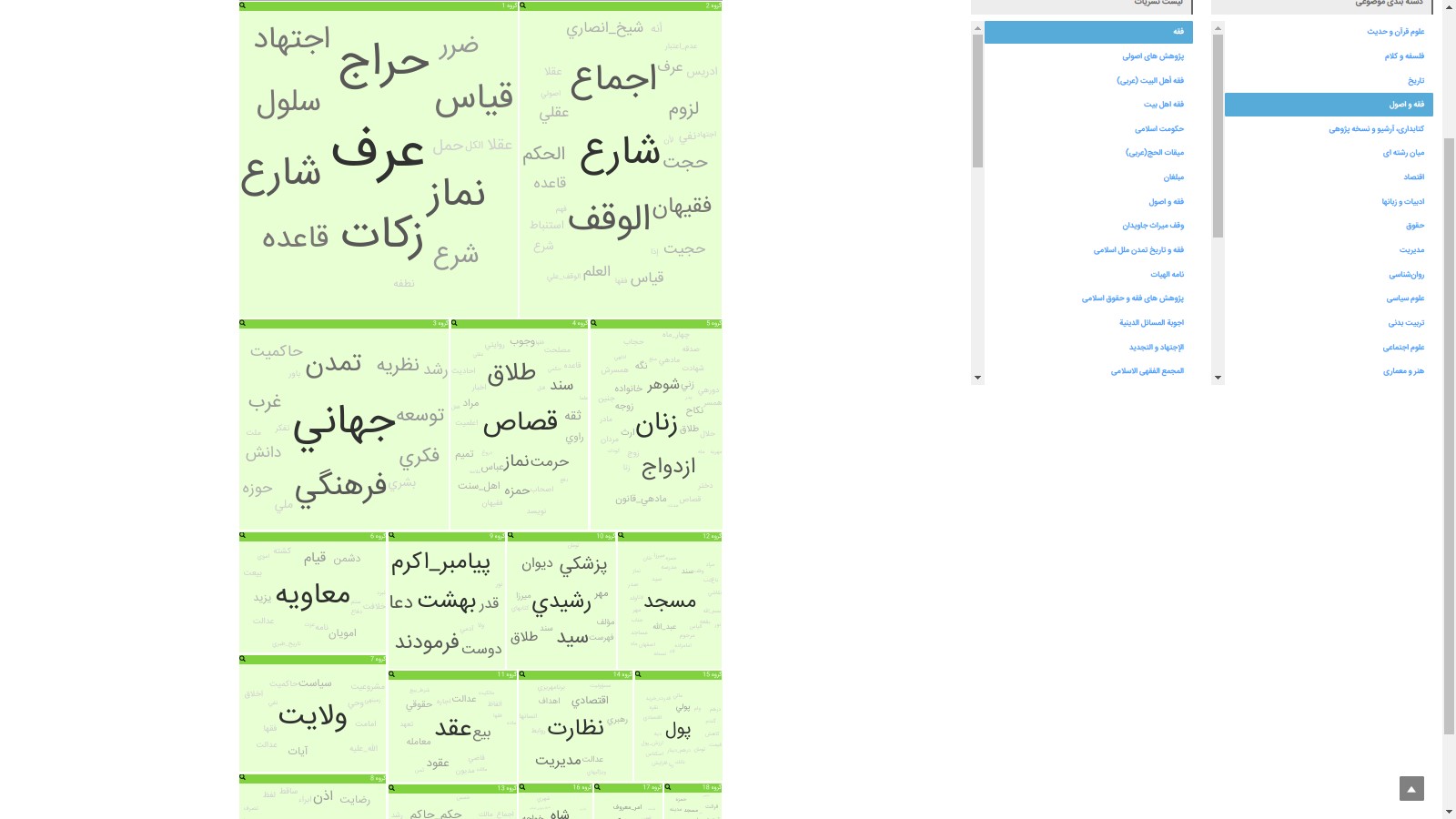
Figure 2: An example of topic modeling in NoorMag
Next Steps
Topic modeling is an approach that can be used both as an infrastructure and as a final product by users. For example, if a user performs a search, the topic modeling output of the retrieved documents displays a relatively complete picture of the concepts and topics discussed in those documents.
Another use of topic modeling is extracting phrases that can be placed as concept nodes in the development of ontologies, as these words are considered fundamental words of the text.
Conclusion
This document has been prepared to familiarize researchers and scholars with the topic modeling tool. The utilization of topic modeling is still in its early stages. It seems that topic modeling can be beneficial in various fields. However, final and practical utilization requires collaboration and exchange of ideas with researchers as the primary and end users of this product.
References
[1] Latent Dirichlet Allocation (LDA)